The Solipsist Philosophy: Found Once Again

I found the solipsist theory once upon a time in my life when I was 16. I recall it clearly, and these were times I’ve never forgotten. My life elevated to a fever pitch of mania and sociopathy. I tragically abandoned moralism that was held in me by Roman Christian and US Military parochialism. Right and wrong, right and wrong. My life diverged from logic that was held close by me through the school work academia. I graduated shortly after turning 17 because of some technical workings of the credit system between the two high schools I had attended, and then I entered the adult world having no preparation what so ever.

Solipsism was working in a boarding school as a teen for a year. As an adult in the world thereafter it had no place. The expectations, means, dues, and pressures socially and financially…well, those were not something solipsism could solve for.

I resorted to religion and cultism. I would improvise on these things in a bizzare way for a few years. This was not something that was going to solve for my problems.

Imagine if you were the only European white person to sail to Indo Australia 10,000 years ago. They are religious. Their paradigms and societies would not allow for you to live let alone prosper freely. That was my disposition with the people of all of the cities I lived in. I didn’t understand this. I denied this. Even my family disputed my relevance and associative value to them. There are many attempts to contact with past friends and family that were never replied to, and the very few who did would not be anyone of any mind to help me solve for the expectations, means, dues, and pressures socially and financially.

The mental alchemy I’d perform on myself including with use of entheogens would cause severe agnosis of my faculties. I spent 20 years searching, trying to figure out the world, myself, and what the hell was going on. When I was funded to start a tree service contracting company, I worked feverishly trying to succeed and master this business and trade. I was funded for being so diligent, sharp, insightful, and intent as a baseball player before this. I’d be funded by the same man to start an online stock trading office regimen later on.

This pursuit of business and success for myself, reputation, family making, and the funder opened the door of the internet and anthropology. I studied intently trying to solve for everything I had been perturbed by all my life. I would study 100 hours a week no time off for weekends and often no sleep at night. I would wake to the study, and I’d fall asleep in the middle of my work…for years.
That led to informationlogy, then mindology and paradigmology. I’d apply my rigorous regimen around this mine until the mine ran dry except to keep finding the same facts over.

And today I find solipsism again.

I uncovered like under a glacier that’s melted off. It works. It has mindological function. I had cursed this all of these years, but it mends a life in ruin and insolent PTSD. Hmmmm, I have to give it some thought then.

Solipsism is dangerous in the wrong hands. Those that cannot justify it logically, the philosophical kind, will not find it. They are safe from it, and others are safer from them.

What of the moralist, well rounded, seasoned intellect with this informationological artifact?

The solipsist theory is simply that one is mind, and that mind is all one can possibly know for sure. What mind portrays whether it’s the world or the self may not be necessarily. The mind is information, and information functions by informationology. If all aggregate in the mind are subject + predicate aggregate representing and meaning all else including the self, then what would mean self is not quite the self, or is it?

The mind is self, and therefore the information it is is self. Information is of informationology and thus logic, so is the self informationlogy and logic? It’s the core of the universe and the core of oneself. It precedes both, and it’s prerequisite for both to occur.

Yes, self is, mind is, information is, logic is, informationology is. Predicate matrix or paradigmology.
It goes without saying this predicate substance material phenomenon is the brain laden with. What’s that brain? What a brain, sigh.

When I get down to it I am a phantasmagorical thing. I say this is to myself personal. I don’t mean to boast superiority vs. inferiority to anyone else.

The reference to the concept, “I know that I know not,” is derived from this facet of the grand truth.
Take this fact for example. It’s known that I suffer from agnosis. Yes, I suffer from insolent PTSD, fallacious and prohibitive superceptions, and I suffer from anthrophobia. If it wasn’t for this, no walls would have closed in on me, and I’d have thought of myself as a popular and worthy tribic man out there. I’d never have revealed to myself what I have. I’d never be so seasoned, experienced, and intellectual because I’d have never stepped out of the societal role “with the tribe.”

The mindological problems crushed me down. The disposition with the natives crushed me down in combination. Down, down, down in a geological sense until I hit a vein of information on the internet, and there’d I’d mine, think, and write my way to and through informationology, mindology, and paradigmology.

I’d be forced to forge my way through the previously unbearable barriers to this point of understanding by no other way but these mindological maladies and dispositions with the natives.
To find all of this and ultimately this logic and solipsism I would have to suffer the perpetual pressures and social anguish in my mindology and paradigm. Vice versa to find it would mean to mend these pressures, maladies, and anguish.

The more these mishaps and disdaining slights sever me from what would be an ordinary tribic role in common commendation from the natives, and the more that my paradigm, character, and behavior is disfigured not to mention my financial status, the more I dig intellectually.

My business, financial, and athletic regimens are my digging. It’s a perpetual combination. One forces the other. The carrot on the stick is the possibility of relief some day. It’s also interest in the success, knowledge, and self reliability.

These hardship do also perpetuate the reliance on the solipsist theory.

Myself is not myself all of the time. It’s rifters and urges, superceptions and distractions. It isn’t to have full control. It’s to have half control.

So in regard to the informationological solipsist question about the existence or relevance of the predicatory self, and I don’t mean the real self that the mindological graphicals represent, then these often are so foul, insolent, and dimented that I absolutely need the solipsist theory along with all of this mindology and informationlogy just to bear this rifting self and self grafting.

It has been a tormenting hardship to bear the grafting of the crazed rifter and the tormented rifter in dual orbit with each other in place of my true sense of self. That true sense of self would be my sensible self of course, and a sensible state of mind would only come from a thorough and considerate course of self analysis to define what is and isn’t the self.

The self is what solipsism is all about apart from informationlogy and logic which is self I find. That’s kind of grandiose I think. Profound. Hehe.

The ego’s automatica which I’ve called it or the endocrinology that is key started by the illusory graphicals are signals that are in disrepair in me. These signals are fouled in me by my own rifters, and they are further confounded by the natives chanting the anthems that I’m an untouchable caste of slaves to them. The walls do cave in from out and from within.

It’s quite an existential predicament. I had no idea it would have ever come to this when I was a boy I remember in baby blue hue vivid, panoramic, paradigm.

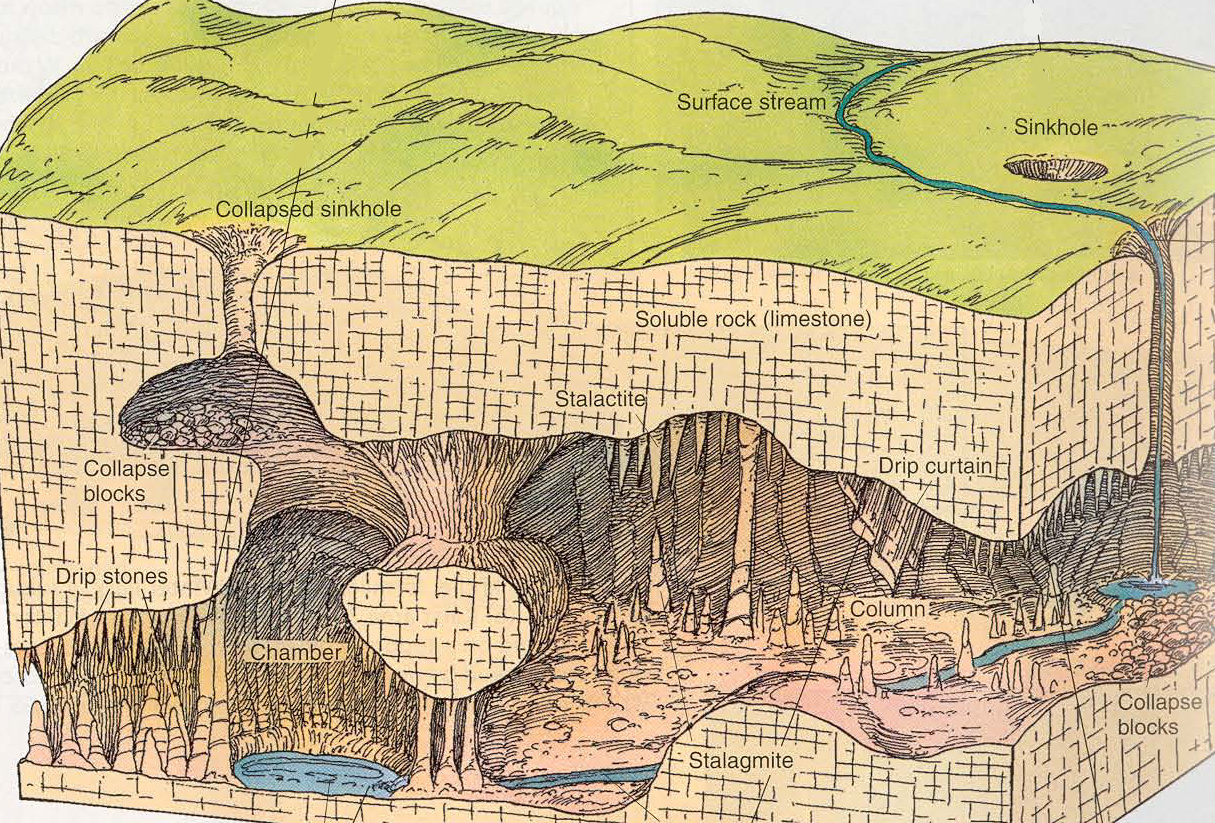
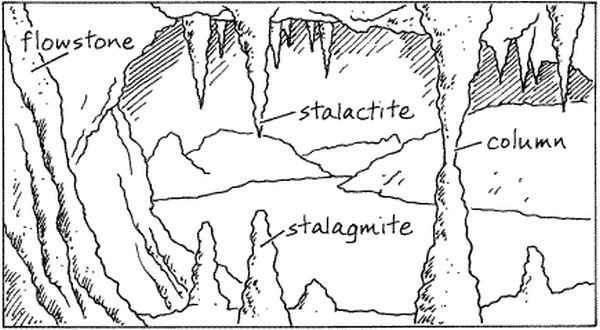
It’s to be mental stalactite and stalagmite from top and bottom, and to be in between their points which constantly impinge on my mind emanating fear, inanity, bizzaro world. It’s perpetual condemnation, and no one can see it. No one can know this is. It’s mind. Even to describe it is a feat, and what’s more is anyone who could understand it which hasn’t happened.
It’s a strange predicatory state of phenomena in the universe…

…and…it is self…the information, the paradigm, and so the solipsism stops the impingement. It deactivates the endocrinology, and the points don’t dilapidate what it is.

I know it is self on self here, but this is what it is like, and the solipsism removes the vice that I cannot stand still in and bear at all as another person will approach me in my kitchen as though a wild cat were released under my skin. It’s inexplicable, but it is. No person can understand it, and their further disdain and condemnation of me about this further binds this vice situation over me.

With the solipsism I can throw all of these predicatory graphicals and signals away, the whole world in view, the self, and all words and worries…completely away. Disregard them while I carry out my daily routine.

Solipsism is freeing. I can look up, look out, and ponder within about the distant matters with confidence I can achieve with anyone near and about. It’s the key from the slavery in the mystery that the cave is laden with.

When I found solipsism the first time it was because the natives including family had a disposition with me, and it was because I had a philosopher for a literature teacher who enlightened me. When I thought rigidly and thoroughly about the concepts of wisdom he’d spoke in class, it was like rocket fuel inside of me. When I found solipsism, this would be the pinnacle.

I climbed socially like a bat out of hell. I then could take anyone. I used to say, “I could play anyone.” I could too. This was profound to me when I could only succumb to inner frailty before that year. Had I had stayed in that school one more year continuing the same regimen and beliefs I’d have adapted very well with the natives, had a family, performed professionally, and so forth rudimentarily.

The solipsism freed, and from the freedom from the cave of mindological slavery came profound social adventure. With profound social adventure I’d learn to be a better conversationalist with nuance and tenacity. I’d learn to “play anyone.” I’d learn to earn respect from people. I’d learn to navigate and establish myself among the natives. I graduated a year early, and I’d never complete this development in myself.

In the vacuum of absence without any family or friends and only the adult pressures and certainly no real understanding of what I had done to succeed that much for the first time in my life the walls caved in, and I was ruined. I’d returned to the slavery of the cave. I’d dwell in shambles and the shackles for 20 years.

On the 21st year I’d find the key, find the freedom, and like a bat out of hell sky rocket with several successes.

Keep in mind my toils were much, heavy laden, complex, and brave. I learned a lot, experienced a lot. I’m well researched in many things putting me in a unique position with this key of mindoloical freedom. 2019 will be the most interesting year in my life yet. It all turns back around this year.


image
image


image

image

1 Like

Hi. Out of curiosity. How do you address from a solipsistic perspective the problem of “other minds”? Solipism is also one of my pet obsessions, but I rather not go into detail lest I get struck off again.

You’re right? I know what you’re saying. lol And it’s from there, this critical point, that sociopaths and psychopaths emanate.

I’ll say this though, and I’ve been saying this a long time, and I’ll be saying this the rest of my life to people and in my writings etc.

What the question is that you’re asking which isn’t the most uncommon thing is about moral consequence or “moral hazard.” Yes, at the front it specifically about whether or not there are other minds, but behind this question comes the inadvertent quandary about consequences for lack of “moral responsibility” to other minds.

Well, there is a moral phenomenon, and there is a mind phenomenon, and both are obvious when you research and think long enough. It’s like mining the same mine many have mined over the millennia. The truths and concepts are there. It’s just a matter of getting to them…before doing damage to others and yourself.

First of all, let’s divide reality into subjective and objective. The common frame of reference is that the subjective is mainly an informationous reflection of the objective. Information is what represents another thing, and it does so via various phenomenal aggregate that correlate into the meaning of what it represents. It can represent other information. It can represent mind which is information.

The basis of understanding of the mind, not the brain, is in the study of the “information phenomenon.” I call that informationology. The primary underlying principle is logic which is that everything in the objective is a thing and what it is being like or doing. In other words an object and a function which is the basic logic to computer coding that is based in informationology that can be traced back to the philosopher Leibniz a few hundred years ago who was studied in this kind of thing dating back a few thousand years ago including Greeks and Asians.

Being that we’re not “computers” per se as we’re from the “bio kingdom” as information processors while they are from the “techno kingdom” as information processors both being cybernetic organisms or organizations…being that we’re not them we’re going by general language grammar rules. In grammar we don’t call the sentences that describe the objective and subjective object and function. We call these specific naturally occurring things the subject and the predicate.

The subject is the phenomenon, and the predicate describes what that phenom is like or does. When you gaze around in your eyes and ears, you’re brain naturally analyzes the subjects around including subjective ones in other people’s minds. That means that it pin points the subjects of interest, and then it appends all of the predicatory information about those subjects as fast as it possibly can. It’s a constant process that we’re not really aware of, and it’s common in all mindological species. Some computers are doing this kind of thing.

Language is a description of nature. When we listen to language or read it, our brains are looking for the subjects, and then describing them with the predicatory parts of the rest of the sentences. When we lose our attention, we start to try to understand what is being said, and we can’t. The words seem to slip through our mitts so to speak. The reason why is we haven’t learned that we learn about realty first from the subject and then from the predicatory information about that subject.

Therefore if we don’t want to lose attention when reading or listening, we have to constantly search and pin point the subjects of each statement. The brain will automatically append the predicatory information about those, and the images about what is being spoken will suddenly appear to us. The more we practice, the faster we get, and the better we get. Some people have been practicing this since they were kids. Others have never. Still others are somewhere in between.

The subject + predicate structure is logic. It’s based on the nature of the objective. If one of those is missing, it’s not information because of the nature of the objective. However both can be present, and that is information, but that doesn’t mean it is true information. It’s logical, but it’s not true. It’s a logical fallacy, and that informationous statement contradicts the objective.

Information precedes the objective by the way. It precedes the evolution of minds, ours and all others. It precedes the evolution of the universe.

Now we’ve got some informationology behind us. We can step into mindology easily now.

The mind is informationous. It represents other things including itself. The tangible material that mind is forms a profile with aggregate parts that correlate with each other, thus they mean what they mean or represent what they represent.

All of the mindological information forms a matrix or realm. It’s the subjective realm or “a” subjective realm.

Here upon closer scrutiny we find the quandary about solipsism and thus whether or not other minds exist that require or moral responsibility.

We say that the image of another person in our minds is only an image if we are solipsist. How was that image generated? I say by my brain. Do I know that though? No, because the more I search, the more I found out that all I have is mindological, informationous representations without more.

What if I hurt one of those images of another person? Consequence to my actions? Yes, and it can be regrettable.

But if we’re solipsist, how can there be regret? Because pain information means suffering, right? Also the absences of some information because those things are no longer present in our minds means regrets too for similar reasons.

So there’s consequences? To what? We call that the objective. There are consequences to the subjective too, our own subjective selves. Yes, if we don’t operate our subjective selves right, we’ll regret it.

So when we are making choices and acting according to the true logic of our minds, other people and their minds, and the rest of objective nature, we’re trying to act practically.

The solipsist question is, “Are we just minds coordinating with ourselves, or are we minds coordinating with real people and a universe that’s being represented with our minds?”

The answer is not perfectly knowable. We can’t prove what the mind is generated from however we can prove that our mind is. We can know it is, and we can prove that it becomes a state of dismay, regret, and suffering in certain circumstances.

Whether it is what generates our mind that is the mechanical procession that generates the behavior and words from the images of other people…or it is not…I can’t tell you. What I can tell you is that something generates the behaviors of those people and that universe that shows up in my mind information.

Therefore I can conclude that something generates my mind’s behavior, and my mind’s behavior both what I consider myself and what I consider others including the rest of the objective nature is something tangibly quarreling and consequential. I must consider underlying procession behind what my mind does what it does or says what it says when it is as the images of other people and things…and myself.

I say “myself too” because the information that is myself is as much information no less or more than the information that represents anyone else, and the underlying procession that causes the information that represents myself apart from information that represents others is in question.

The underlying procession that processes any of this mind information is what is of consequence. It is what sees to it that there are reactions, cause and effect, ways, styles, behaviors, systematic principles.

If there is moral hazard, it is to the underlying procession that generates the information that is my mind which says “this is me and of me.” Regardless of whether or not the underlying procession really is me or mine or not, it can be what generates not only the information that represents the other people, but it might be generating the behavior of those other people.

In other words if I’m the procession that generates the information that is my mental image of myself in every way, maybe this that I am as a generative procession is those other people too. That means that everyone is me, and when they do something as consequence for what I have or haven’t done to them or for them, it’s really me doing this to me.

This means that I’m many people acting consequentially with each other, and I generate this mind image as information about it all in an unknown, underlying procession beyond my grasp. If this is the case, I am not what I thought I am up to now. I’m nothing like what the conventional concept of self is according to all of the images of people’s I’ve met all of my life.

There’s moral consequence just like there is objective consequence. I can figure out how things work with people and things, and then I can do better. When I learn to be moral to people through practice, thought, consideration, and focus on being moral, I learn to hone my behaviors inside and outside in a virtuous way.

Virtue is what is good for people, and the more virtue the more good for more people. Vice is the exact opposite.

The sociopath and psychopath in the sense of vice operate without caring what other people are going to think or feel after they say or do what they say or do. When they say or do anything, they are doing it to trick themselves which is that underlying procession that generates the information that is their minds including those images of other people, so that their underlying procession doesn’t generate any regret or suffering. They aren’t operating based on what anyone else will think or feel except themselves, thus they are not virtuous.

Apt people can be apt of vice or apt of virtue, but both can be apt.

Do we choose to be virtuous, or do we choose to be of vice?

I always choose virtue despite not knowing without certainty the answer to the solipsist’s question. And that is to behave and act as though those other minds are real and matter and that all of the information I know about my mind is true about theirs, thus I can predict the outcome of theirs when I present virtuous acts and words to them. The outcome is that I have succeeded in being accepted tribically.

The procession that renders my mind is a tribic one. I know this from several years of experience with it, several years of anthropological study, etc. It has a sociolitic persuasion in its procession and meaning. I’ve figured that out about me and other minds. There are consequences about it when being cursed or praised by others the way there are when starving, ingesting toxins, or eating well.

A solipsist person will never question eating. How about sociality? And if sociality, then why? I say the tribic reasons is why, and it’s very evolutionary.

But all of that has to do with a reality that I cannot prove exists beyond a solipsist’s view of my mind and all it represents. It means that I’m an extremely complex underlying procession, or it all means many angles that are all meaningless predicates about the same thing, the only thing possible, which is my underlying procession.

Leibniz showed the entire universe can be described with ones and zeros which is the basis of the binary code for computers now. I’ve said that everything in mind and everything in universe are simply many, many predicates no matter how complex, intricate, and numerous that are all elaborate extensions of the same thing: the primary subject. The underlying primary subject that everything is the predicate about is not knowable like the one we discuss in the solipsist quandary.

We wind up simply ignoring the information because it is not much. We don’t do or say what we’ll regret, but we’re not overwhelmed and ridden with “disruptive arrest” within about things because no one cares about “information” from within either. It’s not something to be cared about like that. The sz people have this problem, the depressed people, the manic, and the phobic paranoid. They are filled with this arrest within, and they don’t know why. They don’t informationology, mindology, and paradigmology. They haven’t found solipsism.

Another way of describing solipsism is “soloism.” LOL

Solus = Alone
Ipse = Self

That’s ancient Roman (Latin) for Solipsism.

I think in theory it’s one thing, but in practice it amounts to something else. I think it helps like a therapy that’s necessary for function and success. It does for me.

If you mind deep enough you get to a level where what we say we are doing, what we are calling things, categories and ideologies, belief systems, etc are nothing like what’s we’ve named them. What it amounts to is a mechanical biology, thus practical. Practical is more safe and/or fulfilling. The more safe and/or fulfilling, the more practical of value. This is what all species are doing, but when you compare them mechanically to the geo kingdom and the astro kingdom (we’re bio kingdom), then what is that? Predicatory haywire?

What matters about anything is what reference it has to another thing? For instance the only reason a wall matters to you is because in reference to others it creates a solace for you. Everything is a cause, and it only matters to you because of the effect. This can get complex, and often people say that it is unnecessarily complex. They often realize that this is just an evolution of predicates, an evolution of informationology, and what they mean and all of the rest amounts to moot.

They can kick it all away with a solipsist point of view, and say, “Meh, in reference to what?” Why does all of this universe matter? To what? What’s beyond it or underlying it? It’s all just a bunch of predicates to people of this mind which all mean the same thing: about the subject.

What’s the subject? We don’t know, but whatever it is that’s what everything means whether we’re saying everything is subjective, or we’re saying everything is subjective and objective.

@NotSeksoEmpirico, if you will, study that, and give me what you can think about all of that.

I hammer milled that about the subject a little while. I type fast, so… Hehe. Give it a study. Say what you like, and say what you disagree with. Challenge me. Hehe. I like that. :+1:

And take your time. It can be any day.

1 Like

This topic was automatically closed 14 days after the last reply. New replies are no longer allowed.