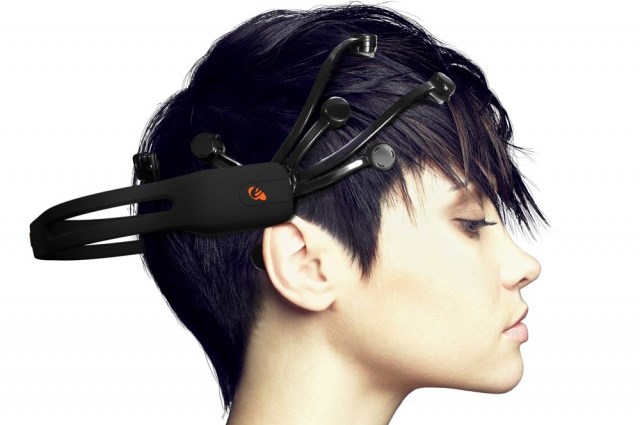
Our brain contains billions of neurons. These neurons carry tiny electric currents, but put together, those currents produce sizable electrical activities or brain waves. These brain waves can be read by an electroencephalogram or EEG.
Vanderbilt scientists led by Sohee Park and Geoffrey Woodman set out to understand the difference in brain waves between healthy individuals and those suffering with schizophrenia. Their study, published in the Proceedings of the National Academy of Sciences (PNAS), that conditions of schizophrenia can be improved by making some brain waves less noisy using small electrical shocks.
The scientists timed volunteers for identifying colors on handheld gamepads. They wanted to know how schizophrenic patients were different from healthy people in responding to mistakes. It’s like asking a toddler the colors of the cars in a parking lot. The healthy people hesitated and took longer before pressing the buttons after wrong calls, but the patients suffering with schizophrenia did not slow down. The schizophrenics also pressed the buttons less forcefully. The scientists think that the inability to correct errors is the primary culprit of schizophrenia.
I saw it done a lot back in the era of high-amplitude ECT. It usually worked pretty well, even though the pts were comatose for a day or two, and it usually took five or six “bombing runs” to cover the target.
But this is quite different. Very low amp and very localized. Done with probes, I expect, not with “head gear.”
@SzAdmin Is that the device for this stuff? If so, we are talking very low amplitude. Because even for modern-day, low-amp ECT, this would not be the way it’s done at all.
“Another user wrote that they ‘seemed to be getting angry frequently’ after using TDCS.”
Especially if they are bipolar.
“‘These are the people who are probably going to do it at a higher dosage than a scientist or clinician would give to a patient and are less aware of the potential risks,’ says Dr Davis.”